
It began like any other televised political panel — polished introductions, polite laughter, and a sense that nothing truly unexpected would happen. But within minutes, what unfolded on live television would ignite one of the most explosive exchanges in recent American political memory.

Political Humor Book
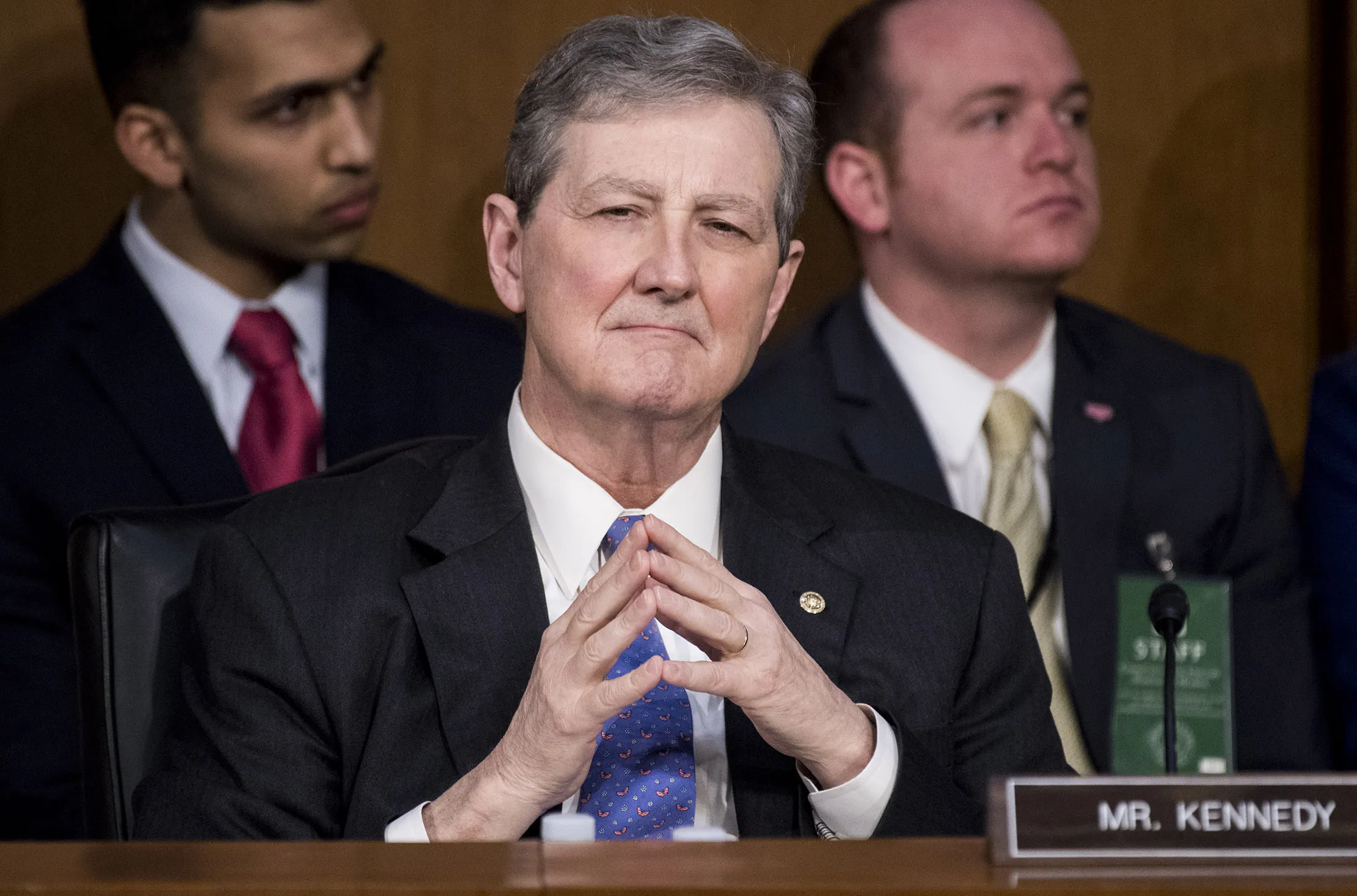
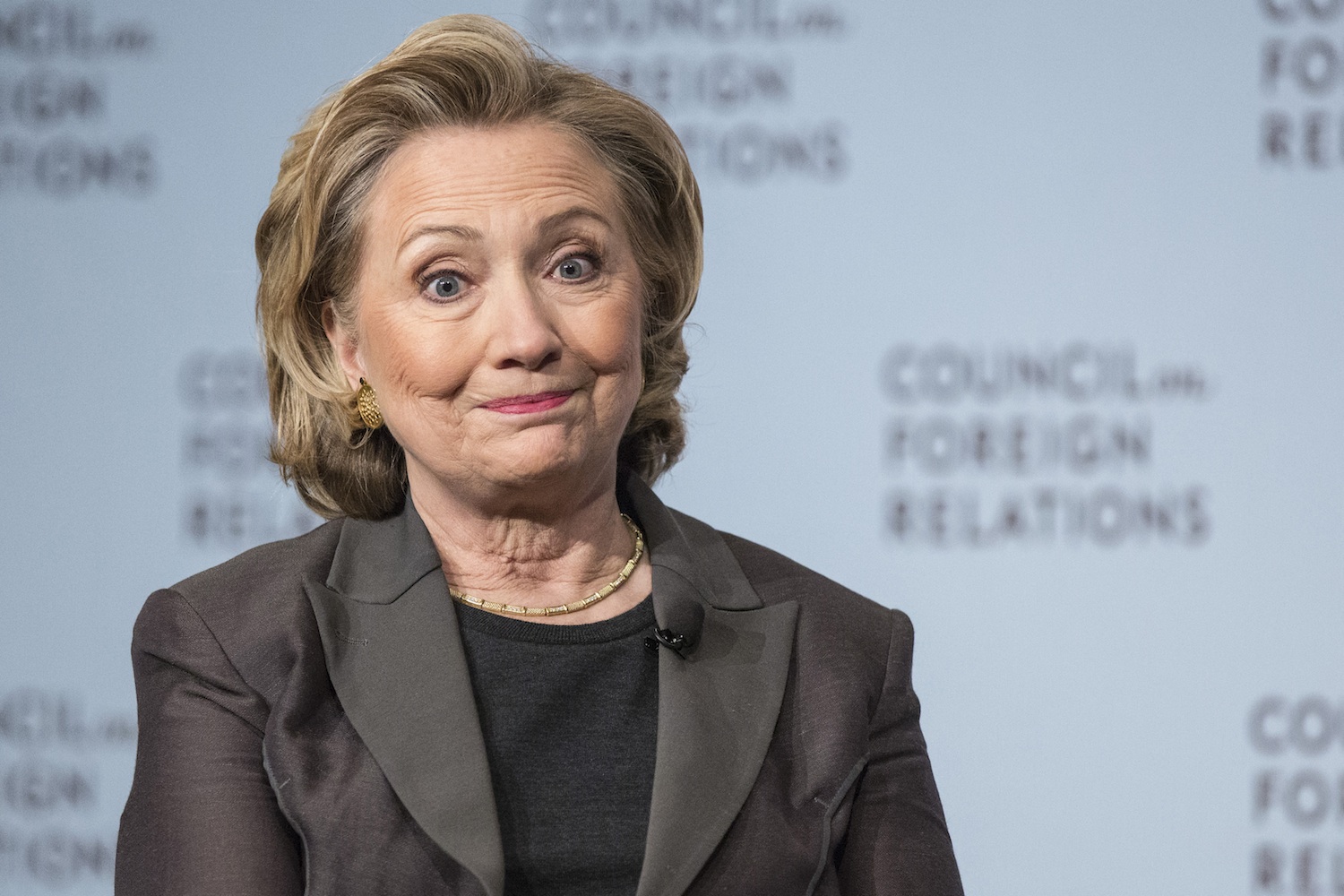
Senator John Kennedy, known for his sharp wit and homespun bluntness, was seated across from former Secretary of State Hillary Clinton. The topic was supposed to be about “The Future of American Trust in Institutions.” Instead, it became an unscripted national reckoning — one that reminded viewers why live TV remains the most unpredictable stage in politics.
The Spark That Lit the Fire
It started when Clinton, in her trademark composed tone, made a quip about “performative outrage in politics.” She didn’t name Kennedy directly — but everyone in the studio, and everyone watching at home, knew who she meant.
“I think some senators mistake shouting for leadership,” Clinton said, smiling faintly as the audience chuckled. “But shouting doesn’t make facts change, nor does it make ignorance patriotic.”
For a moment, Kennedy didn’t respond. The camera caught his eyes narrowing slightly, as though weighing the cost of silence. Then, with a calm drawl that’s become his signature, he leaned forward into the microphone.
“You think it’s a joke, Hillary?” he said softly, the room immediately going still. “You have no idea what we’re up against.”
The words were not shouted. They were delivered like a knife wrapped in velvet — precise, restrained, and devastating.
A Nation Holds Its Breath
There was a collective pause. Clinton blinked, unsure how to respond. The moderator hesitated, waiting for Kennedy to elaborate. And he did — but not in the way anyone expected.
“The people you laugh at — the ones you call ignorant or angry — they’re the same people whose sons fought for this country, whose daughters kept it running when Washington failed them. They’re not props for your punchlines. They’re the heart you forgot you had.”
A murmur rippled through the crowd. Even the cameramen seemed frozen in place. Clinton shifted slightly in her chair, visibly uncomfortable for the first time.
Kennedy continued:
“You say we’re divided? Maybe we are. But not because folks like me talk too loud. It’s because folks like you stopped listening a long time ago.”
The silence that followed was deafening.
From Studio to Storm
Within minutes, clips of the exchange flooded social media. The hashtags #YouThinkItsAJoke, #KennedyVsHillary, and #ColdLineOfTheYear began trending on X, Facebook, and TikTok. Political commentators scrambled to interpret the moment: Was Kennedy being disrespectful, or was he channeling a truth that millions felt but couldn’t say out loud?
Conservative voices hailed it as a “masterclass in composure and conviction.” Liberal pundits accused Kennedy of exploiting populist anger for political theater. But regardless of where one stood, everyone agreed — the senator had struck a nerve.
CNN replayed the clip in slow motion, analyzing every word and gesture. Fox News aired it on loop, calling it “the most honest ten seconds of political TV in a decade.” Even late-night hosts couldn’t resist referencing it. Stephen Colbert joked, “I haven’t seen Hillary that quiet since election night 2016.”
Secretary of State Memoirs
The internet, as always, did the rest. Memes poured in: Kennedy holding a microphone like a sword, Clinton mid-blink with captions like “When the roast hits too hard.” But behind the humor, there was something deeper — a sense that the moment had touched a raw, collective nerve.
The Divide Exposed
In the days that followed, editorials filled the nation’s newspapers. The New York Times called the confrontation “a mirror to America’s fatigue with polished politics.” The Wall Street Journal praised Kennedy for “breaking the decorum that suffocates truth.”
Even among Democrats, quiet conversations began to surface. Some admitted privately that Kennedy’s critique wasn’t entirely wrong — that the party’s language had grown detached from the struggles of everyday citizens.
Political analysts pointed out that Kennedy’s words, though aimed at Clinton, resonated with working-class Americans across the spectrum — people who felt mocked, misunderstood, or written off as “backward.” His tone wasn’t one of rage, but of hurt pride — the kind that transcends party lines.
The Man Behind the Moment
Political Humor Book
John Neely Kennedy, the senator from Louisiana, has built a reputation for being both unpredictable and sharp-tongued. With degrees from Vanderbilt, Virginia, and Oxford, he combines academic pedigree with a Southern folksiness that confuses opponents and charms audiences.
“He’s the kind of man who’ll quote Aristotle and then call you a knucklehead in the same sentence,” one analyst joked. “That’s why his lines hit so hard — they sound like truth, not theater.”
For Kennedy, this confrontation wasn’t just about scoring points. According to aides who spoke afterward, he felt genuinely frustrated by the dismissive tone of elite politicians toward what he calls “real America.”
“He’s been saying for years that Washington laughs at the wrong things,” one staffer said. “That night, he just said it out loud.”
Clinton’s Response
Hillary Clinton’s camp, meanwhile, issued a brief statement the next day. It read:
“Secretary Clinton stands by her remarks regarding the need for fact-based leadership. She respects Senator Kennedy’s passion but disagrees with his characterization.”
But in private circles, reports suggest she was livid — not because of Kennedy’s words, but because of how they resonated. “She underestimated how much that line — ‘You think it’s a joke?’ — would land,” said a Democratic strategist. “It made her look out of touch, and him look human.”
Beyond Politics
As the debate raged on, something unusual happened. Ordinary Americans — from farmers in Iowa to teachers in Georgia — began posting their own reflections under the hashtag #NotAJoke. They shared stories of being laughed at, ignored, or dismissed by those in power.
“I may not have a fancy degree,” one post read, “but I know when someone’s laughing at me instead of listening.”
Another said: “Kennedy spoke for the people who feel like the punchline of every late-night show.”
Suddenly, what began as a sharp political jab had evolved into a national conversation about empathy, class, and the widening cultural canyon between “elites” and “everyday Americans.”
The Echo That Won’t Fade
Weeks later, the moment still lingers in the public consciousness. Analysts compare it to the viral town hall moments that defined earlier elections — when plain-spoken emotion cut through the noise of polished talking points.
“Every generation gets one of these lightning-bolt moments,” said political historian Dr. Mara Schultz. “For this decade, that might be it. A single sentence that exposes the emotional fault line of the country.”
Whether one sees John Kennedy as a truth-teller or a provocateur, few can deny the impact of that night. His words — calm, cutting, and charged with the weight of frustration — turned a simple TV exchange into a national mirror.
And as the dust settles, the question remains:
Was it just another viral clash, or the start of a deeper reckoning about how America listens, laughs, and leads?
For now, one thing is certain — when Kennedy leaned in and asked,
“You think it’s a joke, Hillary?”
it wasn’t just directed at her.
It was directed at all of us.
