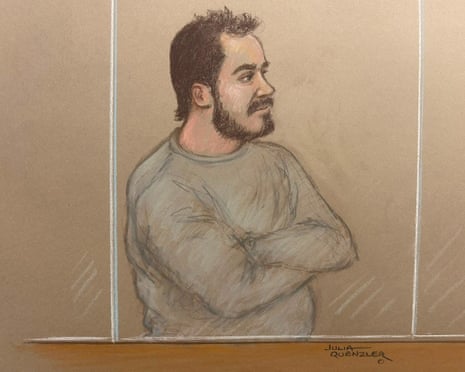
Joshua Kerry, 28, from Rotherham, South Yorkshire, appeared at Westminster Magistrates’ Court on 21 July 2026 charged with the murder of the 78-year-old former Conservative minister and Reform UK spokeswoman. He was later remanded in custody at the Old Bailey. Court artist Elizabeth Cook produced a sketch of Kerry in the dock, showing a bearded man in a grey tracksuit. This image was widely published alongside an earlier photograph of Kerry, taken in 2022 at his former workplace during a charity event, in which he is smiling.
Some people following the case on social media and in online commentary compared the two images and claimed they bore little resemblance. Similar questions were raised about an earlier CCTV still that had circulated in some media reports. Comments online and in certain YouTube discussions suggested the sketch “looked nothing like” the photograph, with a minority of voices floating theories that the wrong person had been detained or that images had been altered. Figures such as commentator Dan Wootton highlighted the visual discrepancies and noted a broader erosion of public trust in official accounts of high-profile cases.
These claims did not gain sustained traction as a mainstream narrative. Courtroom sketches in England and Wales are artistic impressions, not photographic records. Cameras are prohibited in most courtrooms under long-standing rules dating back nearly a century. Artists typically observe proceedings from the public gallery or designated positions, then produce drawings from memory or rapid notes under time pressure. The resulting images prioritise conveying the atmosphere, clothing, posture and key facial features visible in court rather than delivering photorealistic likenesses. Differences in lighting, angle, facial hair growth, expression, weight change over time, and the inherent subjectivity of drawing routinely produce sketches that diverge from formal photographs. This limitation is well understood by media organisations and legal observers and has been noted in previous high-profile cases.
More decisive than any sketch is the evidence outlined by prosecutors. They told the court that internal camera footage from Widdecombe’s home in Haytor, Devon, and a doorbell camera captured the alleged attack on 8 July 2026. According to the prosecution, the footage shows a man entering the property while Widdecombe was eating lunch, approaching her in the kitchen, speaking to her, and carrying out the assault with a hammer before taking her wallet and leaving within approximately two minutes. Kerry is alleged to have driven more than 250 miles from Rotherham to the remote Dartmoor location. He was arrested on 11 July, later also held on suspicion of terrorism-related offences (though charged only with murder), and the Crown Prosecution Service authorised the murder charge after reviewing the police investigation led by Counter Terrorism Policing.
Police and prosecutors have given no indication that they believe the wrong person is in custody. Official statements emphasise that the investigation remains active, that motives (including any possible political dimension) continue to be examined, and that Kerry has the right to a fair trial. The CPS has reminded the public that proceedings are active and that commentary capable of prejudicing the case should be avoided. An inquest into Widdecombe’s death has been opened and adjourned pending the criminal process. A provisional trial date has been set for June 2027.
The visual comparison between the 2022 workplace photograph and the court sketch is therefore best understood as a common feature of media coverage of court cases rather than evidence of misidentification. Photographs released by media or obtained from social media often date from different periods and contexts. Court artists work under constraints that make exact matches unlikely. In this instance the prosecution case rests primarily on contemporaneous video evidence from the scene itself, together with other investigative material gathered after Kerry’s arrest.

Public interest in the case remains high given Widdecombe’s long political career, her television profile, and the ferocity of the alleged attack described in court — 21 blows to the head with a hammer. Online discussion of the images reflects wider scepticism toward institutions that has grown in recent years. However, no credible evidence has emerged to support claims that police detained the incorrect individual. Authorities maintain that the man charged is the person linked by the available evidence to the events at Widdecombe’s home.
The legal process will now test that evidence in full. Until a verdict is reached, Kerry is entitled to the presumption of innocence. Speculation based solely on differences between a formal photograph and an artist’s courtroom impression does not alter the formal position: a charge of murder has been laid, the defendant is in custody, and the case proceeds on the basis of the material presented to the courts. Further hearings are scheduled, and the full details of the evidence, including any additional material relating to identification, will be examined when the matter comes to trial.