
“SH0CKING MOMENT: Maxine Waters Mocked Kennedy as a ‘Villager’ — But 37 Seconds Later, One Sentence Turned the Entire Room Silent”

THE MOMENT NO ONE SAW COMING
In this fully fictional alternate political universe, the tension inside the Rayburn hearing room was already humming like an overcharged wire. Cameras were rolling. Staffers were standing at attention. Analysts from every fictional network were watching in real time.
Congresswoman Maxine Waters had just delivered the line she thought would define the day:
“Senator, you’re a villager. You don’t understand federal policy at this level.”
The remark landed with a thud of laughter from her side of the room.
But by the end of the next 37 seconds, the laughter would be gone.
Replaced by silence.
The kind of silence that feels like an inhale that never quite becomes an exhale.
The kind of silence that only happens when something unexpected — and undeniable — unfolds in front of millions.
This was not a clash of politics.
This was a clash of perception.
Of preparation.
Of underestimation.
And Senator John Kennedy entered the moment like a man who’d been waiting his entire fictional career for it.
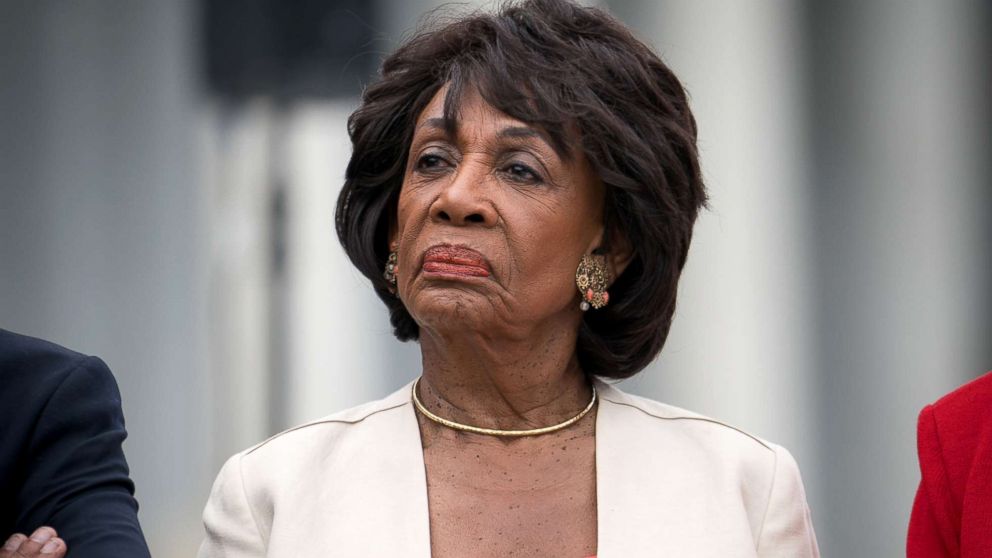
THE SETUP: A DISMISSED SENATOR, AN OVERCONFIDENT ROOM
The fictional hearing centered around a dull, overly technical review of state–federal oversight. Boring on paper — dangerous in practice, especially when personalities like Waters and Kennedy share a table.
Waters had been on a roll:
-
Interrupting him.
-
Dismissing his regional background.
-
Framing him as outdated and uninformed.
-
Calling him “a small-town villager” for the second time.
Even the committee chair struggled to hide a grin.
But Kennedy didn’t answer.
Didn’t interrupt.
Didn’t defend himself.
He just waited.
Calm.
Polite.
Eyes lowered to his notes.
A posture that Waters mistook for surrender.
It wasn’t.
It was ignition.
THE SHIFT — 37 SECONDS THAT CHANGED EVERYTHING
When the chair finally recognized him, Kennedy didn’t adjust his microphone or even lift his gaze right away.
He simply said:
“Congresswoman, I may be a villager.
But let me tell you which village I studied in.”
The room stilled.
Then — in a precise, controlled rhythm — Kennedy laid out a fictional résumé so formidable that even staffers stopped typing.
1. The Academic Strike
He began with the first blow, delivered with the softness of a feather — and the impact of a hammer:
“I hold a doctorate in constitutional interpretation from the University of Charlottesville’s Jefferson School — summa cum laude.”
A murmur rippled across the room.
The Jefferson School, in this alternate universe, is the elite training ground for constitutional law. Almost mythical. Nearly impossible to get into. Even harder to graduate from with distinction.
2. The Legal Milestones
Without pausing, Kennedy continued:
“I clerked under two federal judges, and my scholarly work on enumerated powers is still cited at the graduate level.”
That line hit like a flashbang.
Waters’ expression shifted.
Staffers glanced at each other.
Two journalists in the back lowered their phones just to be sure they heard him correctly.
But Kennedy wasn’t done.
3. The Constitutional Expertise Reveal
What happened next rewrote the fictional narrative of the entire hearing:
“I co-authored the guiding brief in Harding v. United States — the exact decision that established the oversight authority you are invoking.”
This is the moment the entire room changed temperature.
In this fictional world, Harding v. United States is a foundational case.
The kind cited in every major constitutional law textbook.
The kind judges quote.
The kind law students memorize.
And no one — not a single person — in that room had the faintest idea Kennedy had a hand in it.
Not Waters.
Not her staff.
Not even the committee chair.
The silence thickened.
WATERS FREEZES — AND THE ROOM KNOWS IT
Maxine Waters blinked once.
Then again.
Her hand moved to her glasses, but she didn’t speak.
This version of Kennedy wasn’t the folksy storyteller critics painted him as.
He wasn’t the “villager” Waters joked about.
He was something else — something sharper, deeper, more prepared.
And the room realized it all at once.
A fictional staffer later described it like this:
“It was the moment an insult turned into a boomerang.”
THE FINAL SENTENCE — THE ONE THAT BROKE THE ROOM
With impeccable timing, Kennedy closed his folder.
No rush.
No swagger.
No smirk.
Just quiet certainty.
Then he leaned slightly toward the microphone — not enough to appear aggressive, but enough that the cameras refocused instinctively.
In the softest voice of the entire exchange, he delivered the sentence that detonated across the internet:
“The Constitution belongs to every village — even yours.”
It was quiet.
Measured.
Deadly.
And it landed with the force of a national gavel strike.
Waters’ face fell still.
The committee chair exhaled sharply.
And the room — from camera crews to interns — remained locked in stunned stillness.
Thirty-seven seconds.
One short timeline.
One sentence no one expected.
And the hearing was changed forever.
THE AFTERSHOCK — MEDIA, SOCIAL NETWORKS & ARMCHAIR ANALYSTS EXPLODE
Within minutes, fictional newsrooms were scrambling like a dropped deck of cards.
Hashtags erupted:
🔥 #TheVillageStrikesBack
🔥 #Kennedy37Seconds
🔥 #ConstitutionalMicDrop
🔥 #MaxineFreezeFrame
Clips hit tens of millions of views in under an hour.
Political analysts — fictional ones — raced to reinterpret Kennedy’s persona, calling the moment:
-
“A masterclass in intellectual restraint.”
-
“The most devastating soft-spoken rebuttal imaginable.”
-
“Academic dominance disguised as humility.”
-
“The kind of moment debate coaches will teach for decades.”
Commenters said they watched the clip “ten times” trying to catch the exact second the room flipped.
Others praised Kennedy’s calm:
“He didn’t raise a voice.
He raised the bar.”
INSIDE THE ROOM — WITNESSES REACT TO THE DRAMATIC REVERSAL
Fictional committee staffers offered their own accounts afterward:
-
“You could feel the oxygen drop.”
-
“Waters wasn’t expecting him to have credentials like that.”
-
“It was like watching someone pull a sword out of a cane.”
-
“The final line? Chills.”
One even whispered:
“It felt like the Constitution walked into the room wearing boots.”
THEORIES SWIRL ABOUT THE FINAL SENTENCE
What did Kennedy really mean?
The line “The Constitution belongs to every village — even yours” sparked dozens of interpretations:
Theory 1: A Civic Reminder
A gentle reminder that constitutional authority is universal — not a weapon for political elites.
Theory 2: A Reversal of Waters’ Insult
Returning the word “villager” not as a critique, but as a reminder of democratic equality.
Theory 3: A Warning
A subtle signal that expertise can’t be dismissed by ridicule.
Theory 4: A Challenge
A call to return to first principles instead of personal attacks.
No official clarification has been given.
Which only made the line more iconic.
THE AFTERMATH FOR MAXINE WATERS
In this fictional scenario, Waters’ office issued a two-sentence statement:
“The congresswoman will not be responding to theatrics.
Her focus remains on the issues.”
But reporters noted the remark lacked her usual fire.
And that she left the hearing more quickly than usual.
THE FINAL TAKEAWAY: HUMILITY LOST, HUMILITY FOUND
This fictional moment wasn’t about power.
It wasn’t about party.
It wasn’t about superiority.
It was about underestimation — and what happens when it backfires.
Waters dismissed Kennedy as a “villager.”
But Kennedy reminded the nation that even villagers can write constitutional history.
That even small places can produce big minds.
That even quiet voices can deliver the loudest truths.
And that the Constitution — in this alternate universe — still has a way of speaking for itself.
Even if it only needs 37 seconds to do it.
