
Prime Minister Keir Starmer Faces Viral Backlash from England Fans in the U.S. Ahead of World Cup
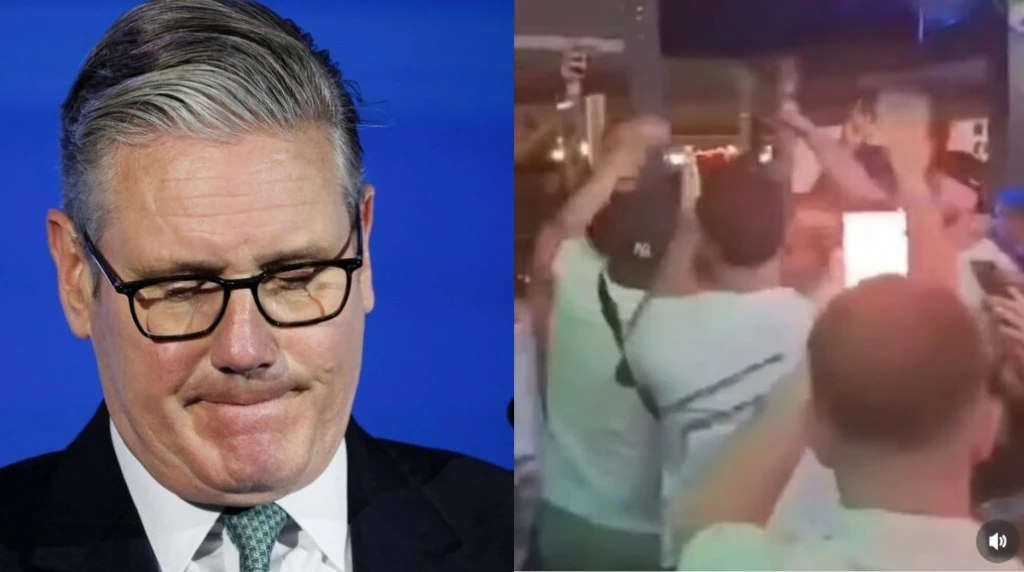
Footage emerging from Tampa Bay, Florida, shows large crowds of traveling fans openly and loudly chanting against the Prime Minister . The spontaneous public demonstration highlights a growing undercurrent of political frustration that has apparently followed British citizens all the way across the Atlantic.
An Unfiltered Barometer of Public Mood
The viral incident is drawing significant attention from political commentators, not merely as rowdy football banter, but as a highly visible reflection of the UK’s current political climate. Analysts point out that football crowds often serve as one of the most “honest indicators” of the national mood .
Unlike carefully curated political focus groups, selected audiences, or partisan activists carrying banners, these crowds are made up of ordinary citizens. Despite having spent thousands of pounds to travel across the world for a sporting event, their domestic political grievances remain at the forefront of their minds . The optics of a disgruntled electorate loudly criticizing their leader thousands of miles away from Westminster presents an unprecedented and highly visible public relations headache for Downing Street .
Mounting Domestic Pressures for Number 10
This sudden wave of international public embarrassment compounds an already difficult political period for Prime Minister Starmer. The chants in Florida are symptomatic of deeper issues brewing back in the UK.
Currently, Starmer’s administration is navigating a series of severe political headwinds. The government is facing mounting pressure from the public and political rivals regarding the nation’s immigration policies and defense spending, alongside growing friction from within his own party ranks .
A Difficult Start on the World Stage
Whether viewed as unfair targeting or a deserved reality check, the viral footage indicates that the British electorate’s dissatisfaction is currently too profound to be paused for a football tournament. As the video continues to circulate widely on social media platforms, one thing is certain: Keir Starmer’s World Cup experience has gotten off to a highly uncomfortable start, and the England national team hasn’t even kicked a ball yet .
“Own Goal of the Century?” Keir Starmer Faces Growing Backlash as England Fans Turn Their Anger Toward Him in America
News Story: A Political Storm Follows England Supporters Across the Atlantic
When thousands of England football supporters traveled across the Atlantic to celebrate their national team at the World Cup, many expected the journey to be about football, national pride, and unforgettable memories.
In scenes that quickly spread across social media, groups of England fans gathered in Tampa Bay, Florida, were filmed chanting against the British Prime Minister. What began as a moment of public frustration among football supporters soon transformed into a wider political conversation about the mood of the British public.
The images were striking.
Thousands of miles away from Westminster, far from the political debates inside the United Kingdom, ordinary football fans were using a global sporting event as a platform to express dissatisfaction with their country’s leadership.
For many observers, the moment represented something bigger than a simple football chant. It became a snapshot of a growing disconnect between political leaders and parts of the population they represent.
The reaction quickly gained attention because of the unusual setting. Football tournaments traditionally create moments of national unity. Supporters gather from different backgrounds, forget everyday disagreements, and come together behind their team.
The chants aimed at Starmer suggested that for some fans, frustrations at home were strong enough that even an international sporting celebration could not completely separate them from domestic concerns.
A Viral Moment That Became a Political Symbol
The footage from Florida spread rapidly online, attracting reactions from political commentators, journalists, and ordinary viewers.
Supporters of the Prime Minister argued that football crowds are not necessarily a reliable measurement of national opinion. A stadium or fan gathering can often represent the loudest voices rather than the majority view.
They argued that football supporters often represent a broad cross-section of ordinary working people — citizens who may not participate in political rallies or appear in traditional opinion polls but still have strong feelings about the direction of the country.
Unlike organized political demonstrations, the Florida scenes appeared spontaneous. There were no official campaigns, carefully prepared speeches, or professional activists leading the moment.
Instead, the message came from people who had traveled thousands of miles, spent significant amounts of money, and dedicated their time to supporting England.
That detail made the moment particularly powerful.
The question many political analysts began asking was not simply:
The deeper question was:
“Why did dissatisfaction with British politics appear so strongly even during an event normally associated with national celebration?”
A Difficult Political Environment for Keir Starmer’s Government
The controversy arrives during a challenging period for Prime Minister Keir Starmer and his administration.
Since taking office, Starmer’s government has faced pressure over several major issues, including immigration policy, public services, economic concerns, and defense spending.
This transition from opposition to government is often difficult for any political leader.
When a party is campaigning, expectations are built around future promises. Once that party takes power, voters begin demanding visible results.
For Starmer, this has created a difficult balancing act.
Supporters argue that major national problems cannot be solved quickly and that governments need time to implement long-term policies.
Opponents argue that voters expected faster action and clearer improvements.
This tension has contributed to growing criticism from different political directions.
Others argue that the government is facing unrealistic expectations after inheriting complex challenges.
Regardless of political viewpoint, the Florida incident highlighted one important reality:
Public frustration can travel anywhere.
Even thousands of miles away from Britain, political emotions remain present.
The Unusual Image of Domestic Anger Abroad
The symbolism of the event is what made it especially significant.
British politics is normally centered around locations such as Parliament, government buildings, political conferences, and election campaigns.
But this moment happened in a completely different environment.
It happened among football supporters in America.
That contrast created a powerful visual message.
A British Prime Minister facing criticism from his own citizens abroad during a global sporting event creates an uncomfortable political image.
For any leader, perception matters.
Politics is not only about policies and statistics. It is also about emotions, public confidence, and the relationship between leaders and ordinary citizens.
A government can survive criticism over individual decisions, but maintaining trust becomes much harder when people feel disconnected from those in power.
The Florida chants became symbolic because they appeared to represent something deeper:
A frustration that some voters feel their voices are not being heard.
Football, Identity, and Politics Collide
The relationship between football and politics has always been complicated.
Football is often described as an escape from political divisions. It brings people together through shared identity and national pride.
But football has also historically been a place where social feelings become visible.
Supporters are not only spectators. They are citizens with opinions, concerns, and personal experiences.
A football crowd can reveal emotions that may not always appear in official political discussions.
The passion of supporters can amplify both positive and negative feelings.
When fans celebrate, they can create powerful moments of unity.
When they are angry, they can create equally powerful moments of political symbolism.
That is why the incident involving Starmer attracted attention beyond the football world.
It was not simply about a chant.
It was about what the chant represented.
A Public Relations Challenge for Downing Street
For Prime Minister Starmer’s team, the incident created another difficult media moment.
A single emotional moment can sometimes influence public perception more strongly than a detailed policy announcement.
The challenge for Downing Street is managing the narrative.
Supporters of the government may describe the incident as a small moment amplified by social media.
Critics may describe it as evidence of a wider national mood.
The reality likely lies somewhere between these two positions.
A crowd in Florida cannot represent every voter in Britain.
However, dismissing such moments completely can also be risky because public frustration often becomes visible through unexpected events.
Political history shows that symbolic moments can sometimes reveal deeper tensions beneath the surface.
My Professional Perspective
After three decades observing political communication and public sentiment, I believe the most important part of this story is not the chant itself.
The deeper story is why this moment captured attention.
Many people will focus on the dramatic headline:
“England fans turn against Keir Starmer in America.”
But the real question is more complicated:
Why did this particular moment feel meaningful to so many people?
The answer lies in the gap between political leadership and public emotion.
Modern voters are not only judging governments through economic numbers, policy documents, or parliamentary debates.
They are judging them through personal experiences.
Can they afford everyday expenses?
Do they feel their communities are improving?
Do they believe politicians understand their concerns?
These emotional questions often become more powerful than political speeches.
The Florida incident revealed something important about modern democracy:
Public opinion does not always appear in traditional political spaces.
Sometimes it appears in unexpected places — a football pub, a stadium, a social media video, or a gathering of fans thousands of miles from home.
That does not mean every chant represents the entire nation.
But it does mean leaders should pay attention when ordinary people express frustration in moments where they are not expected to be making political statements.
The overlooked detail in this story is that these supporters were not attending a political event.
They were attending a football tournament.
They traveled because of their love for their country and their team.
And perhaps that is precisely why the moment became powerful.
When people express anger during a political rally, critics can dismiss it as organized opposition.
When people express anger during a celebration, it raises a different question:
Why did frustration become impossible to separate from national pride?
Another important issue is the challenge facing modern political leaders.
In the digital age, leaders no longer control when political conversations happen.
A government can carefully prepare announcements, speeches, and media strategies.
But one spontaneous moment captured on a smartphone can create a completely different narrative.
For Starmer, the incident is not necessarily a political disaster by itself.
But it is a reminder that public trust is fragile.
A government may win an election, but maintaining public confidence requires continuous communication and visible results.
The unanswered question is whether this moment represents only temporary frustration or a deeper shift in public attitudes.
Will these feelings disappear as economic conditions improve?
Will supporters return to viewing politics as separate from football?
Or does this incident represent a broader dissatisfaction that will continue influencing British politics?
That is the question political analysts will continue watching.
Conclusion: Beyond the Chant, A Warning Sign About Public Trust
The images from Florida lasted only a few moments.
But sometimes history remembers moments not because of their length, but because of what they reveal.
The reaction from England fans toward Keir Starmer was not simply about one politician or one football tournament.
It was about the relationship between leaders and the people they represent.
A government can explain policies.
A Prime Minister can defend decisions.
But public emotion cannot always be managed through official statements.
The most important lesson from this story is that political dissatisfaction does not always appear where politicians expect it.
Sometimes it appears far from home, surrounded by football shirts, flags, and supporters who simply wanted to celebrate.
